Respect and love for Man, the Earth and its fruits guide our work because it is from Nature that our philosophy of well-being originates.
There are many projects aimed at helping the environment and good practices to which Bios Line is actually committed, in practice, every day.
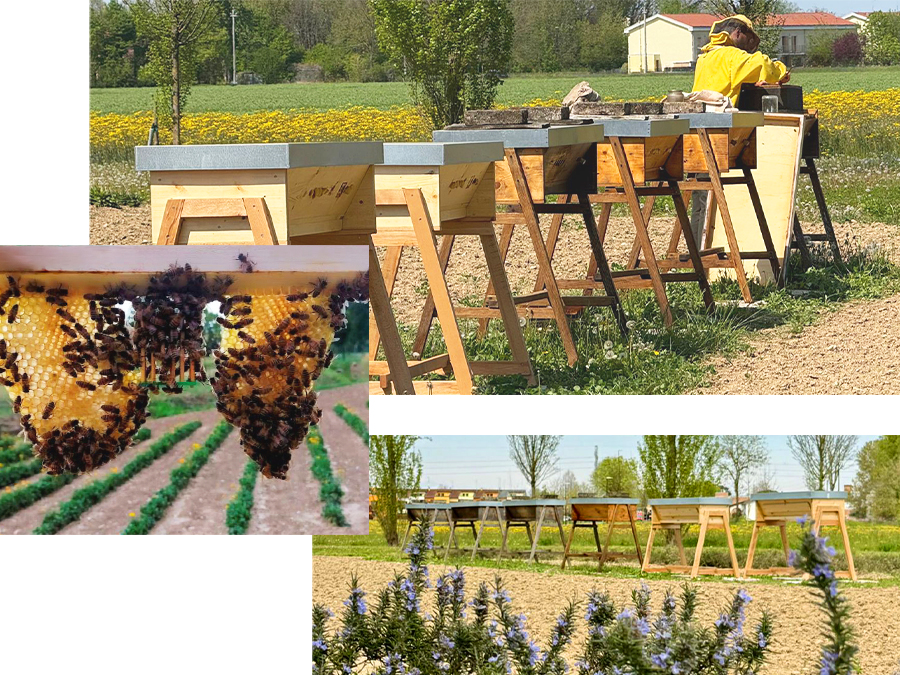
Since 2021, Bios Line has been home to an apiary at its headquarters, set up in collaboration with the “Apiamoci Agricultural Society”, comprising six bee colonies. The initiative forms part of the company’s activities aimed at raising awareness of the role of pollinators in ecosystems.
We have chosen to place the colonies in structures that allow the bees to build their honeycombs freely, developing as they would inside natural hollow logs, without coercion or invasive human intervention.
Bios Line, in collaboration with Treedom, has planted 500 trees of various species in Africa and South America. According to estimates provided by Treedom, these trees have the potential to absorb up to 136,000 kg of CO₂ over the course of their lifetimes. This figure is a forward-looking estimate associated with the reforestation project and does not represent a reduction or offset of emissions generated by the company’s operations.
Each single tree is planted, photographed and geolocated to show our commitment as openly as possible: discover our forest.
Through a contractual commitment with the FRAME association, the company supports the activities of organisations working to promote alternative scientific methods to animal testing, thereby contributing to the widespread adoption of research practices that comply with European regulatory standards.
FRAME is an independent research charity dedicated to developing, validating, and promoting non-animal methods that will end the use of laboratory animals. FRAME’s vision is a world where no animal suffers for science (www.frame.org.uk).

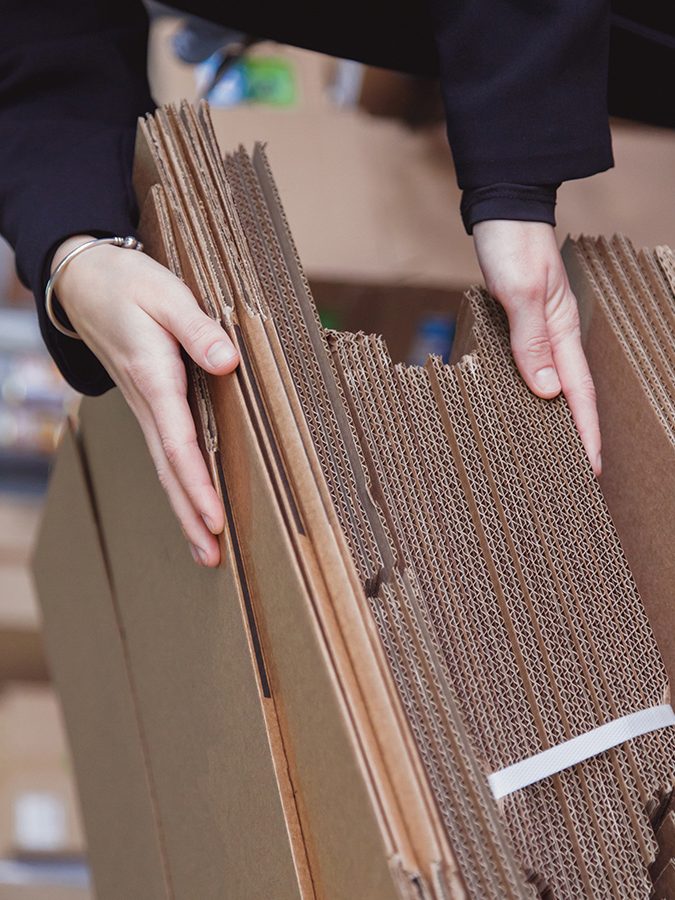
For its printed materials (boxes, catalogs, price lists, informational materials, promotional brochures, etc.) and shipping packaging, Bios Line relies on FSC®-certified suppliers, who guarantee the use of materials sourced from responsibly managed forests, in accordance with the standards of the Forest Stewardship Council.
Our company also holds an FSC® Promotional License, which allows us to promote and highlight our commitment by using the FSC® label in our communications.
Understanding how energy is used in the company’s operations enables Bios Line to interpret its energy requirements with greater insight and to understand the link between these and the greenhouse gas emissions generated by the organisation. With this in mind, the company has begun monitoring energy consumption relating to the running of its workplaces and corporate travel.
In 2025, Bios Line’s energy consumption totalled 2,430.9 GJ, attributable to the use of three energy sources: electricity, natural gas and diesel.
In detail, natural gas, used for space heating, accounted for 291.5 GJ. Diesel used for the company fleet, which also includes plug-in hybrid vehicles12, stood at 966.9 GJ.
The main contribution to energy requirements came from electricity, which reached 1,172.5 GJ in 2025. Of this figure, 1,059.5 GJ was drawn from the grid, whilst 113.0 GJ was self-generated and consumed via the photovoltaic system.
At Bios Line’s headquarters, a photovoltaic system comprising 300 polycrystalline silicon solar panels has been installed, with a total installed capacity of 60 kW. In this way, the system enables the company to meet part of its electricity requirements using energy from renewable sources, thereby reducing its reliance on electricity purchased from the grid.
When selecting suppliers, we also consider their geographic proximity to our headquarters, provided this is compatible with quality, technical, and availability requirements. This approach is designed to optimize logistics and minimize transportation distances throughout the supply chain.
Understanding how energy is used in the company’s operations enables Bios Line to interpret its energy requirements with greater insight and to understand the link between these and the greenhouse gas emissions generated by the organisation. With this in mind, the company has begun monitoring energy consumption relating to the running of its workplaces and corporate travel.
In 2025, Bios Line’s energy consumption totalled 2,430.9 GJ, attributable to the use of three energy sources: electricity, natural gas and diesel.
In detail, natural gas, used for space heating, accounted for 291.5 GJ. Diesel used for the company fleet, which also includes plug-in hybrid vehicles12, stood at 966.9 GJ.
The main contribution to energy requirements came from electricity, which reached 1,172.5 GJ in 2025. Of this figure, 1,059.5 GJ was drawn from the grid, whilst 113.0 GJ was self-generated and consumed via the photovoltaic system.
At Bios Line’s headquarters, a photovoltaic system comprising 300 polycrystalline silicon solar panels has been installed, with a total installed capacity of 60 kW. In this way, the system enables the company to meet part of its electricity requirements using energy from renewable sources, thereby reducing its reliance on electricity purchased from the grid.